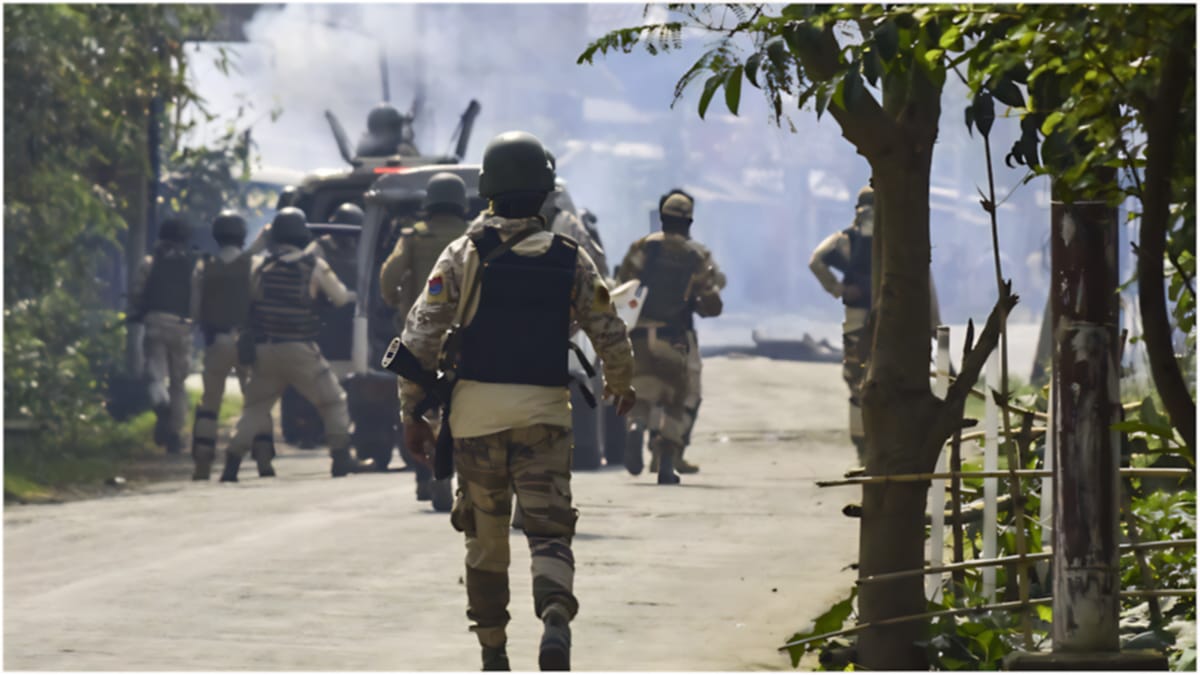
The situation in Manipur is one of the most severe and protracted internal conflicts in India’s recent history. What began in May 2023 as violent clashes over affirmative action policies has entrenched itself into a prolonged, multi-faceted civil conflict characterized by deep geographical and ethnic segregation.
As of late 2026, the state remains fractured, with hundreds dead, tens of thousands displaced, and new fronts of violence still emerging.
The Parties Involved and Conflict Origins
The conflict is primarily between two ethnic groups, driven by a complex mix of land rights, identity politics, and resource scarcity:
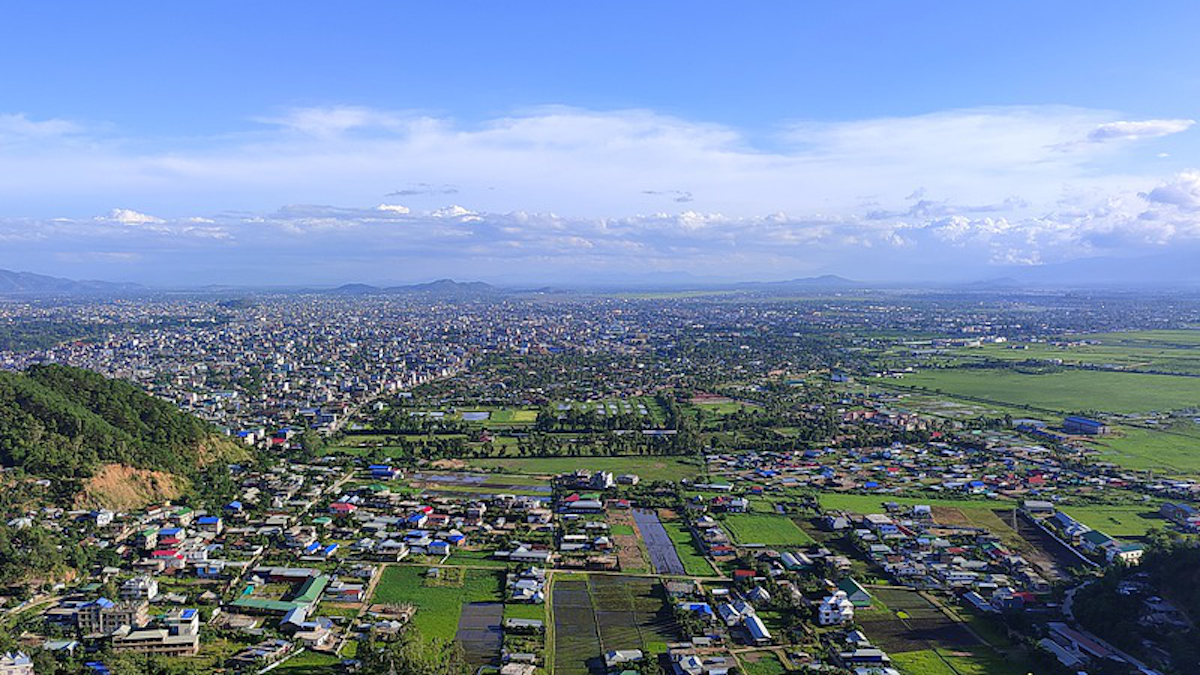
- The Meitei: The majority ethnic group (accounting for over half the state's population) who primarily reside in the Imphal Valley, which makes up only 10% of Manipur’s land. Predominantly Hindu, the Meitei have historically held more political power and development resources.
- The Kuki-Zo: A coalition of tribal communities who live in the surrounding hill districts, which comprise 90% of the state's geography. Predominantly Christian, the Kukis hold "Scheduled Tribe" (ST) status, which grants them specific constitutional protections, including the exclusive right to own land in the hills.
The immediate trigger for the violence in May 2023 was a court-ordered push to grant the Meitei community Scheduled Tribe status. The Meitei argued this was necessary to protect their cultural identity and allow them to purchase land in the hills. The Kukis vehemently opposed this, fearing it would dilute their political representation and allow the more affluent Meitei to encroach on their ancestral lands.
Beneath this trigger are compounding grievances: the Meitei accuse Kukis of harboring illegal Chin refugees from neighboring Myanmar and running illicit poppy-growing operations. Conversely, the Kukis accuse the Meitei-dominated state government of using anti-drug campaigns and forest conservation laws as a pretext to unlawfully evict tribal communities.
Is it Ethnic Cleansing?
While the Indian government avoids the term, many political observers, human rights organizations, and activists describe the situation as a form of ethnic cleansing. The violence has resulted in complete demographic separation. Kukis living in the Meitei-dominated Imphal valley were violently forced out, their homes and churches burned. Similarly, Meiteis living in the Kuki-dominated hill districts were driven into the valley.
Today, an heavily militarized "buffer zone" separates the two communities. Over 60,000 people remain in internal relief camps, unable to return to their homes due to the threat of lynching or murder.
The Viral Video and the Army's Role
In July 2023, a horrific 26-second video surfaced showing a mob of men parading two Kuki women naked, groping them, and dragging them into a field where they were sexually assaulted. The incident had actually occurred on May 4, 2023, a day after the riots began, in the Kangpokpi/Thoubal area.
The Indian Army was not involved in this assault. The perpetrators were part of a Meitei civilian mob. However, survivors and tribal organizations alleged that the local state police (who are predominantly Meitei in the valley) were present, failed to protect the women, and effectively abandoned them to the mob. Following national outrage over the video, the Central Bureau of Investigation (CBI) took over the case, and several men, including a juvenile, were arrested.
 SATP
Dr Afsara Shaheen, research associate Institute for Conflict Management.
Government Actions
The state and central governments have faced intense domestic and international criticism for their handling of the crisis:
- Militarization: The federal government deployed tens of thousands of troops from the Indian Army and the Assam Rifles (a paramilitary force) to maintain buffer zones. However, trust is non-existent: the Meitei frequently accuse the Assam Rifles of bias toward the Kukis, while the Kukis accuse the state police commandos of actively fighting alongside Meitei militias (such as Arambai Tenggol).
- Information Blackouts: The government imposed one of the longest internet shutdowns in the country's history to curb the spread of rumors, though critics argue it was used to suppress reporting of atrocities.
- Political Instability: The state government has struggled to maintain authority. A 2025 Human Rights Watch report concluded that the state leadership actively inflamed the conflict by endorsing polarizing narratives and patronizing armed groups. In February 2026, the state government was reorganized, with BJP leader Yumnam Khemchand Singh sworn in as the new Chief Minister.
Where Things Stand Now (October 2026)
The situation remains deeply volatile and the conflict continues to evolve. The absolute physical separation between the Meitei and Kuki communities remains in place, with sporadic gunfights across the buffer zones and targeted ambushes by armed militias on both sides.
Furthermore, the conflict has fractured into new dimensions. Shortly after the new government took power in February 2026, a fresh phase of violence erupted between the Kuki and Naga communities (another major tribal group in the hills) starting near the village of Litan, spreading to other parts of the state. Just this week, in late October 2026, fresh outbreaks of violence claimed several more lives, underscoring that a peaceful political resolution remains entirely out of reach.
The conflict in Manipur is heavily driven by armed militias,insurgent factions,and radical socio-political organizations that have effectively sidelined state authority.
Arambai Tenggol (AT) Arambai Tenggol (translating to "dart-wielding cavalry") is a radical Meitei ethno-nationalist militia based in the Imphal Valley.Formed initially as a cultural revivalist group, it has rapidly morphed into the most powerful non-state armed entity in Manipur.
- Role in Conflict: Academic and security reports identify AT as a primary driver of the violence against the Kuki-Zo communities. Members have been accused of leading mob violence, burning churches, and executing targeted killings.
- Weaponry: The group is heavily armed, having amassed thousands of automatic rifles, mortars, and thousands of rounds of ammunition looted from state police armories in the early days of the conflict.
- Political Power: Arambai Tenggol wields unprecedented political influence. In early 2024, the group notoriously "summoned" 37 members of the Legislative Assembly (MLAs) and two Members of Parliament to the historic Kangla Fort in Imphal, forcing them to sign an oath pledging to fulfill the militia's demands regarding the state's integrity.
 Vajiram Content Team
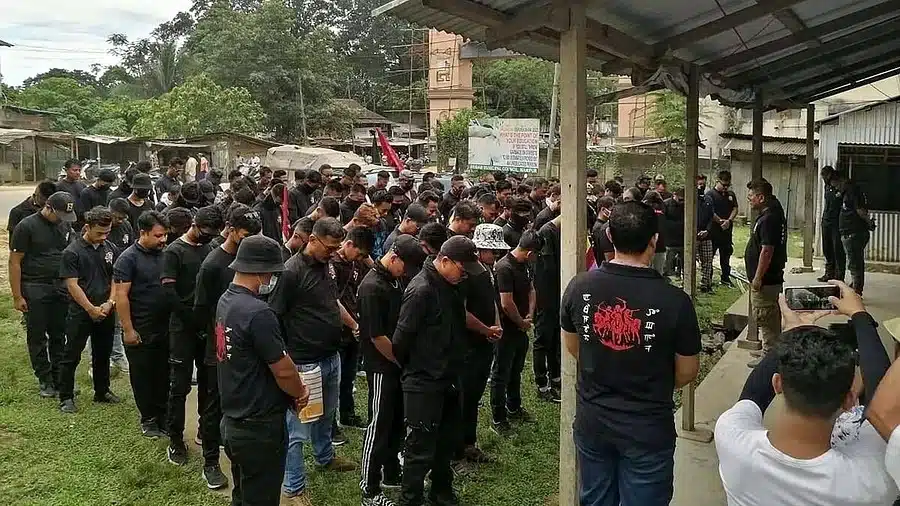
Meitei Leepun Led by Pramot Singh, Meitei Leepun is another powerful Meitei socio-political organization that acts as a vigilante force. While somewhat less militarized than Arambai Tenggol, it functions as a highly organized cadre. Political opponents have compared its structure to right-wing nationalist groups like the RSS or Bajrang Dal. Its leadership has publicly described the conflict as a "global war" against Kuki migrants and illegal settlements, actively rallying Meitei youth to defend the valley.
Kuki-Zo Insurgent Groups (SoO Factions)The Kuki-Zo community has a long history of armed insurgency. For over a decade, about 25 distinct Kuki insurgent factions—organized primarily under two umbrella groups, the Kuki National Organisation (KNO) and the United Peoples’ Front (UPF)—had been under a tripartite "Suspension of Operations" (SoO) ceasefire agreement with the central and state governments.
- Breakdown of the Pact: Under the original SoO pact, over 2,200 cadres were confined to designated hill camps, with their weapons locked away. However, the state government blamed these groups for instigating the 2023 violence and protecting illegal poppy cultivation. During the riots, many of these weapons were taken out of the double-locked armories.
- Current Status: The SoO framework effectively collapsed on the ground, though the central government has attempted bilateral renegotiations. These hardened insurgent cadres are now deeply involved in frontline fighting, ambushes, and defending Kuki buffer zones. They officially demand a separate administration or Union Territory for Kuki-dominated areas.
Village Defense Volunteers (VDVs) On both sides of the ethnic divide, particularly in the foothills where Meitei and Kuki territories meet, regular civilians have mobilized into "Village Defense Volunteers". These are predominantly young men—and in some cases, women—armed with single-barrel hunting rifles, improvised explosives (pompi guns), and looted state weaponry. Operating out of makeshift sandbag bunkers, they run 24-hour shifts to guard their villages against nocturnal raids by rival militias.
The proliferation of weapons and the immense power wielded by these fragmented groups have created a situation where extortion, vigilante justice, and militia rule often override the authority of the state police and federal security forces.


