A rate hike can't produce a barrel of crude oil, refined products like gasoline and diesel, or even a ton of rare earth minerals. But the research on Federal Reserve’s inflation mandate adds a qualification: When the Kevin Warsh’s Federal Reserve adjusts the rates, it isn't trying to reverse the supply shock. It's trying to stop a one-time jump in the price level from turning into unchecked inflation. Whether that requires hikes depends on several conditions. But first let’s understand the difference between demand-driven inflation and supply-driven (also known as cost-push) inflation.
Why the two kinds of inflation are different
With demand-driven inflation too much money is chasing a fixed amount of output (i.e. when rates remain too low for too long, or when the treasury declares a large stimulus, as in the fiscal transfers during Covid-19, or during an overheated labor market, as in too much demand for software engineers, or too much demand for electricians and plumbers for data centers). Inflation and the output gap move together, so tightening interest rates fixes both. When the Federal Reserve raises rates, the opportunity cost of money increases, which causes people to spend less and save more. It also causes businesses to borrow less for capital intensive projects due to higher borrowing costs.
With a supply shock, inflation rises while output falls, so the Federal Reserve faces a real trade-off. In a research paper, Blanchard and Galí formalized this: in the simplest form of New-Keynesian model, stabilizing inflation automatically stabilizes the welfare-relevant output gap, which they called the "divine coincidence." But when the model is extended to allow for real wage rigidities (i.e. no wage cuts), the divine coincidence disappears, and central banks indeed face a trade-off between stabilizing inflation and stabilizing the welfare-relevant output gap. Kim (2016) showed that when the supply shock is in non-substitutable inputs this trade-off exists even when wages are perfectly flexible. That describes oil, refined products, and rare earth minerals quite well.


A hike in interest rates works against a supply-shock input only indirectly. It suppresses demand elsewhere until other prices and wages slow enough to make room for the energy price jump. That can be costly. Bernanke, Gertler and Watson's classic paper found that a substantial part of the recessionary impact of an oil price shock results from the endogenous tightening of monetary policy rather than from the increase in oil prices per se, though they noted large standard errors in their analysis. Hamilton and Herrera (2004) disputed the result, and Bernanke, Gertler and Watson published a reply. Guerrieri, Lorenzoni, Straub and Werning add another reason for caution. Some supply shocks are "Keynesian": shocks that reduce potential output in a sector of the economy, but that, by reducing demand in other sectors, ultimately push aggregate activity below potential. An oil shock acts partly as a tax on consumers, so it often cools demand by itself. https://www.nber.org/system/files/working_papers/w26918/w26918.pdf
And as far wages are concerned, they aren't really a separate case alongside the others. Wage inflation is usually a transmission channel, either from a tight labor market or from workers catching up after a supply shock eroded their pay. It matters because it's sticky. Bernanke and Blanchard found the effects of overheated labor markets on nominal wage growth and inflation are more persistent than the effects of product-market shocks. Wages are the mechanism by which a supply shock becomes the Fed's problem. https://www.brookings.edu/wp-content/uploads/2023/04/bernanke-blanchard-conference-draft_5.23.23.pdf
What 2021–23 taught: the categories interact
The Covid-19 pandemic blurred the clean distinction between demand-driven vs supply-driven inflation. Bernanke and Blanchard found energy prices, food prices, and price spikes due to shortages were the dominant drivers of inflation during early stages of the pandemic. That looks like a supply story. But they also found that the policy fiscal stimulus – the likes of which the world had never seen – also contributed to inflation, but primarily through its effects on consumer demand for commodities and goods in limited supply rather than through the labor market. In other words, the shortages happened because the demand was so strong. The San Francisco Federal Reserve estimated that fiscal stimulus may have contributed to about 3 percentage points of the rise in U.S. inflation through the end of 2021. https://www.nber.org/system/files/working_papers/w31417/w31417.pdf
However, Gagliardone and Gertler conclude that the surge in inflation was a mostly combination of oil price shocks, fiscal stimulus, low rate monetary policy, even after allowing for demand shocks and shocks to labor market tightness (i.e. more jobs than workers). They also stress that important for the quantitative impact of the oil price shock is a low elasticity of substitution between oil and labor. The lesson is that a supply shock landing on an economy with loose policy or excess demand is far more inflationary than the same shock landing on a balanced economy. Accommodating the shock is what makes it persist. https://www.nber.org/system/files/working_papers/w31263/w31263.pdf
When "look through" works, and when it doesn't
The BIS's influential 2022 analysis argues that inflation behaves differently depending on its starting level. In low-inflation regimes, price changes, including those of "salient" items such as energy, food and housing, tend to leave only a temporary imprint. But as inflation rises, price increases come into sharper focus, and move out of the zone of "rational inattention". Employees exert more effort to recoup lost purchasing power. Its conclusion is that monetary policy can afford to be more flexible in a low-inflation regime, which it brings about and hardwires, and it needs to be especially timely and decisive during transitions.
 Agustín Carstens
The ECB's Isabel Schnabel made the hawkish case explicitly after Ukraine. She argued that a world of larger, more frequent supply shocks calls for forceful action, citing the uncertainty about the persistence of inflation, the threats to central bank credibility and the potential costs of acting too late.


The Fed's own framing sits between these views. Powell said in 2025 about tariffs that a reasonable base case is that the effects will be relatively short-lived — a one-time shift in the price level, but also that "we will not allow a one-time increase in the price level to become an ongoing inflation problem."
 Dan Ennis
Why raising rates is inevitable
The synthesis: looking through a supply shock is sound when four conditions hold:
- the shock is a one-off level shift (i.e. no 6 month+ Hormuz scenario)
- inflation expectations are anchored (inflation is bound to Fed’s 2% anchor)
- inflation starts near target (Fed’s 2% target rate)
- the labor market isn't tight (labor market is tight when there are more jobs than workers available to fill them).
When those conditions fail, inflation becomes persistent problem and seeps into other areas of the economy and hike isn't aimed at the oil price. It's aimed at second-round effects.
What the Fed’s trade-off actually reduces to:
- Hike and be wrong: it took an unnecessary growth-hit fighting a shock that was already reversing. It is recoverable when it raises in the next cycle.
- Don’t hike and be wrong: expectations drift, wage catch-up begins, lack of immigration leads to higher food costs, and the eventual disinflation costs far more. Volker is what that repair looks like.
Applying this to Hormuz right now
The facts are stark. Iran's closure of the strait led to a near-complete halt of ships transiting beginning March 1, 2026. The IEA has called it the "largest supply disruption in the history of the global oil market".
 Ricardo Reyes-Heroles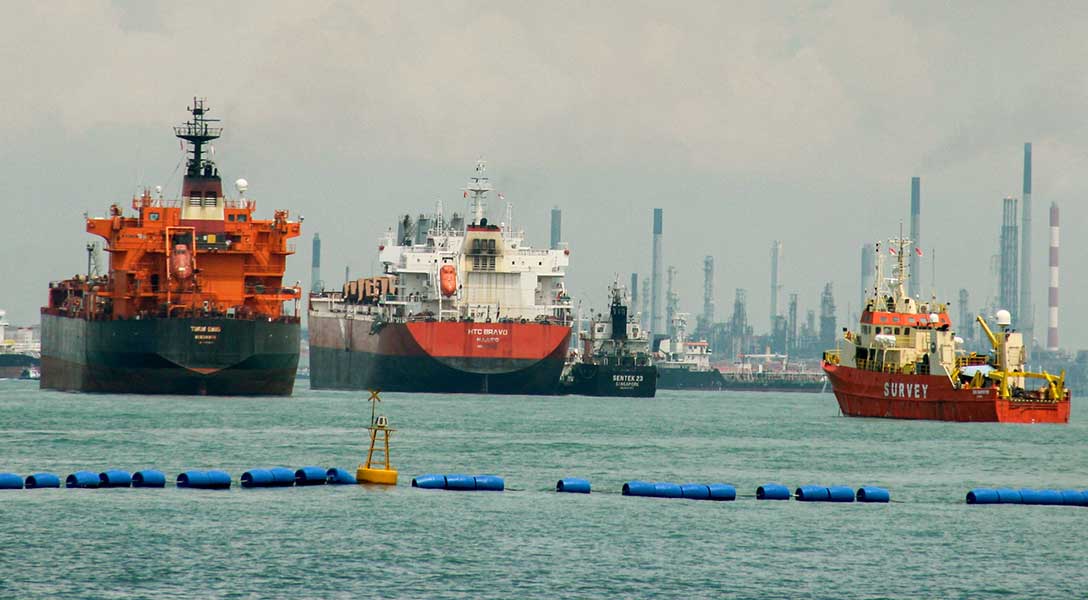
Research-based estimates of the direct inflation effect are modest. Kilian, Plante, Richter and Zhou found that even if the closure lasted one quarter, the surge in oil prices is expected to raise US headline inflation by 0.6 percentage points and core inflation by 0.2 percentage points in 2026. That small core effect is the look-through argument. CEPR Their model also contains the hawkish argument: inflation expectations in 2026Q4 increase only when the closure lasts 3 quarters.
More than six months in, the traffic remains severely disrupted for most of the past five months as of mid-September. Not just that, the Houthis in Yemen have also halted traffic from the Red Sea’s Bab al-Mandab Strait. Hence, the shock is also spreading beyond crude. The Dallas Fed notes that higher shipping costs from the blockade will completely offset the disinflationary effects of the tariff reduction. https://www.dallasfed.org/~/media/documents/research/papers/2026/wp2609.pdf
Then there is the issue of Oil Refineries: Gulf and Russian refineries are severely depressed and constrained due to active wars. America’s refinery capacity is in the high 90s%. That leaves China at mid-70s% and India at mid-80s%. High utilization is bad for prices because refineries need to be switched off for maintenance and repairs otherwise there is a high risk of catastrophic failures (fires and explosions).
Diesel and jet fuel feed into freight, food and airfares, so product-level shocks pass through to core more than crude alone. Rare earths are a tiny share of the CPI, but they're a low-substitutability input, exactly the case where Kim and Gagliardone-Gertler show supply shocks bite hardest.
The FOMC is expectedly split along the middle. At the July meeting the Committee said inflation remains elevated relative to the Committee's 2% mandate, in part reflecting supply shocks. Three members (Hammack, Kashkari and Logan) preferred to raise the target range by 1/4 percentage point.
The look-through doctrine assumes a low-inflation starting point, and the U.S. hasn't been in one since 2021. Credibility is also in play, with commentary pointing that efforts to control Fed policy is eroding trust.

Where that leaves the argument
The research doesn't say "never hike on a supply shock." It says don't hike because of the first-round effect, and do respond if the shock is spilling into expectations, wages and core services.
The case against hiking rests on three things: the direct core pass-through is small, oil shocks destroy demand on their own, and past rate increases during oil spikes amplified the downturn. The ECB's 2008 and 2011 hikes are the usual cautionary examples; in both instances—driven by an uncompromising focus on inflation under then-President Jean-Claude Trichet—severely damaged the Eurozone economy by tightening monetary policy right into the teeth of unfolding crises
 James Surowiecki
The case for hiking is that the shock has lasted too long to be "one-time," and it's hitting an economy that never fully returned to target.
The evidence to watch is second-round:
- core services excluding energy,
- wage growth,
- long-run expectations measures,
- whether diesel and freight costs are showing up in core goods.
August CPI which came in at 3.4%, nominal wage growth, core services excluding energy & shelter, and long term expectations along with the September dot plot will show which reading the Fed has adopted.