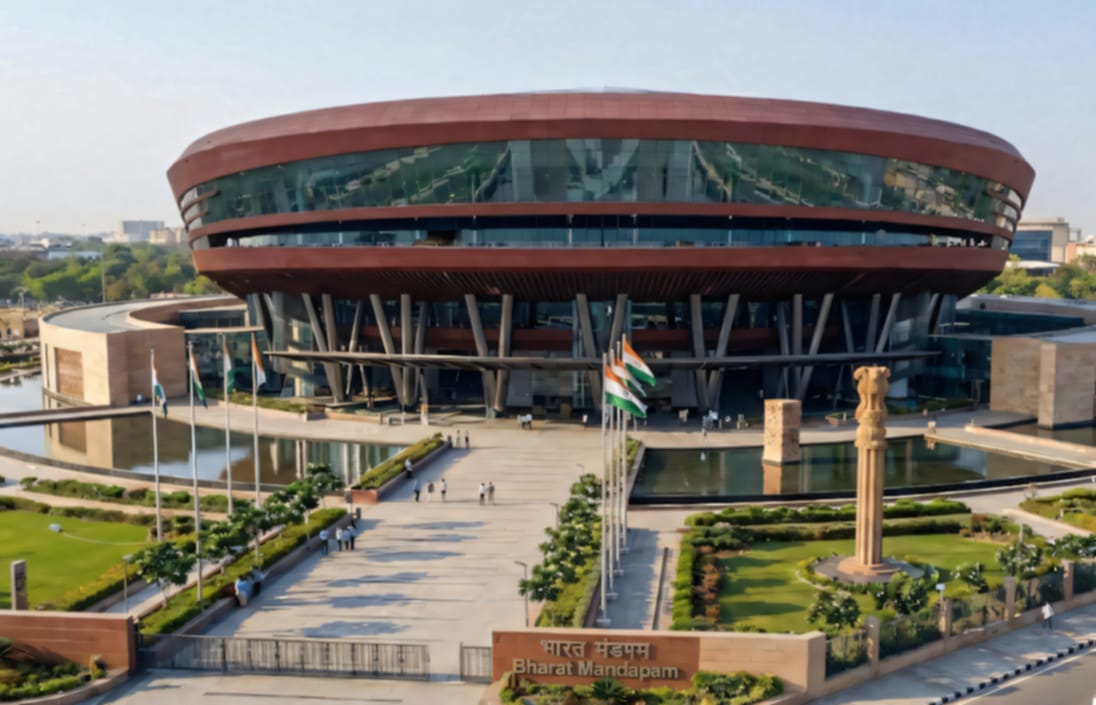
Originally formed in 2006 by Brazil, Russia, India, and China, BRICS has evolved significantly to include 11 nations and outreach partners in Africa. South Africa joined the bloc in 2010, followed by a major expansion in 2024 that brought in Egypt, Ethiopia, Iran, and the UAE. Indonesia later cemented its status as a full member. Today, this expanded roster represents a formidable bloc of the Global South, and their arrival in the Indian capital marks a crucial moment in international relations.
To secure the summit, New Delhi has mobilized a massive security apparatus. An estimated 15,000 police personnel are on duty across the city, securing the summit venue, luxury hotels, airport transit routes, and other key locations associated with the movement of visiting leaders and senior delegations.
A Gathering of Global Heavyweights
The summit will see participation from the heads of the 11 BRICS member countries, alongside leaders from partner countries and special outreach invitees. The guest list reflects the shifting center of global political gravity:
- Xi Jinping — President, China
- Vladimir Putin — President, Russia
- Cyril Ramaphosa — President, South Africa
- Masoud Pezeshkian — President, Iran
- Abdel Fattah el-Sisi — President, Egypt
- Abiy Ahmed — Prime Minister, Ethiopia
- Prabowo Subianto — President, Indonesia
- Sheikh Khaled bin Mohamed bin Zayed Al Nahyan — Crown Prince of Abu Dhabi, UAE
- Mauro Vieira — Foreign Minister, Brazil
- Alexander Lukashenko — President, Belarus
- Kassym-Jomart Tokayev — President, Kazakhstan
- Anwar Ibrahim — Prime Minister, Malaysia
- Anutin Charnvirakul — Prime Minister, Thailand
- Miguel Díaz-Canel — President, Cuba
- Bola Ahmed Tinubu — President, Nigeria
- Shavkat Mirziyoyev — President, Uzbekistan
- Jessica Alupo — Vice-President, Uganda
- António Guterres — UN Secretary-General
The Business Forum: Setting the Economic Agenda
Before the main leaders’ sessions, Prime Minister Narendra Modi will address the BRICS Business Forum on Friday, September 11, 2026. This opening event sets a pragmatic tone, with opening remarks expected from Commerce and Industry Minister Piyush Goyal and External Affairs Minister S Jaishankar. Discussions will focus on agriculture, trade, investment, resilient supply chains, and the digital economy. These meetings will eventually lead into a leaders' session, which Modi is also expected to address.
The corporate turnout is particularly notable. A high-powered Chinese business delegation is expected, featuring Houliang Dai (Chairman, CNPC), Lin Liao (Chairman, ICBC), and Min Wan (Chairman, China COSCO Shipping Corporation), alongside senior executives from Huawei Technologies and Alibaba Group.
They will be joined by heavyweights from other BRICS nations, including:
- Francisco Gomes Neto, President and CEO of Embraer
- Gustavo Pimenta, CEO of Vale
- Phuthi Mahanyele-Dabengwa, CEO of Naspers
- Oleg Belozerov, CEO and Chairman of Russian Railways
- Alexander Vedyakhin, First Deputy Chairman of Sberbank
Together, these executives represent a vital cross-section of global energy, banking, technology, shipping, aviation, and mining sectors.
The China-India Dynamic: Pragmatism Over Camaraderie
While the presence of Chinese President Xi Jinping has generated substantial buzz in India, the reality on the ground remains complex. The 2020-2021 skirmishes in the Galwan Valley set in motion geopolitical dominoes that are exceedingly difficult to reverse. India continues to view China with deep suspicion.
However, economic pragmatism is forcing a strategic pivot. Recognizing the difficulty of reversing the heavily skewed balance of payments in bilateral trade, New Delhi appears to be attempting to loosen the terms of economic investment by Chinese entities. The goal is to bring some of that capital back into the country in the form of Chinese Foreign Direct Investment (FDI). This economic recalibration is happening as India's relationship with a Trump-led Washington hits a historic low.
Consequently, while some of the optics and visuals generated during this BRICS summit will undoubtedly be tailored for Washington's consumption, the fundamental reality between New Delhi and Beijing remains largely unchanged. As long as Narendra Modi is in power, China will find it difficult to roll back the clock to the relative camaraderie the two nations once shared.
Energy Realpolitik: Iran, Russia, and Global Inflation
The summit also unfolds against the backdrop of the US-Iran war, a conflict where India has little leverage to break the status quo. Notwithstanding the Communiqué New Delhi signed during the recently concluded Shanghai Cooperation Organisation (SCO) expressing deep concern over the conflict in "West Asia", India simply cannot afford even the threat of US sanctions by engaging in direct trade with Iran.
Instead, India’s strategic hope lies in maintaining its critical oil trade with Russia. This is currently achievable due to the delay of the Lindsay Graham Russia Sanctions Bill in the US House of Representatives, which has been stalled until after the mid-term elections in the US in November 2026.
However, this energy lifeline comes with its own mechanical limits. India’s refineries have been running at peak capacity for an extended period to process crude. Experts warn that these facilities will soon be forced into mandatory repairs and maintenance. The inevitable result—reduced crude supplies paired with reduced domestic refining capacities—threatens to trigger high fuel and food inflation across the developing world, compounding the challenges faced by the Global South regardless of diplomatic maneuvering at the summit.
